How Ozzy’s Black Sabbath Invented Doom Metal (and Didn’t Mean To)
Revolutions and Ozzy’s Black Sabbath
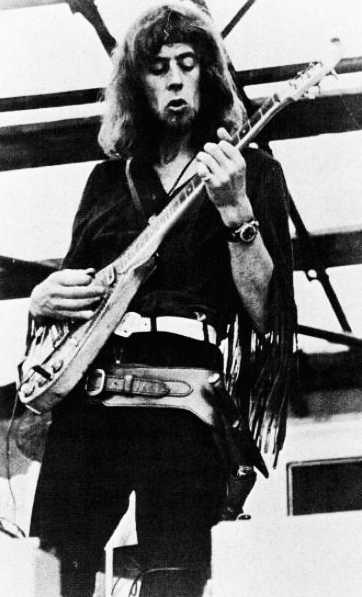
Most revolutions don’t start on purpose and Ozzy’s Black Sabbath creation of doom metal was no exception. When a 17-year-old Tony Iommi lost his fingertips in a factory accident, he wasn’t aiming to reshape music history. But from pain came power. Down-tuned guitars, thunderous riffs, and Ozzy’s eerie vocals collided into something darker, slower, and heavier than anything before. And none of it was planned.
That unintentional alchemy set the stage for a run of albums that would define not just a band, but an entire movement. Across their range of albums with Ozzy, Sabbath evolved from raw experimenters to reluctant pioneers, blending heavy blues, occult overtones and sonic grit into something fans hadn’t heard before. What follows isn’t just a review of those albums. It’s a look at how each one carved its mark into the bones of heavy music.
Dave Barcroft – Rock Vinyl Revival
My thoughts on Sabbath’s studio albums with Ozzy.
Black Sabbath
This debut album was released on Friday 13th 1970 in the UK. (slightly later in the USA) At the time of release it was met with mostly negative reviews, from critics such as the legendary Lester Bangs of Creem magazine. Another review claimed that the album suffered from drug impaired slow reaction times with overlong solos.
The truth was rather more sober. The bludgeoning painful powerful sounding music with heavy distortion was created (in part at least) by an accident guitarist Tony Iommi had as a 17-year-old where he severed the tips of his middle fingers on his fret playing hand. As a result, he created a pair of plastic fingertips and deliberately down tuned his guitar to make it easier to play the strings.
Rolling Stone magazine later voted the opening track, ‘Black Sabbath’- with its bells, thunder and rain- as the greatest ever metal song.
Certainly, this album is generally regarded as the most significant moment in the development of ‘doom’ metal music. It proved to be massively influential.
Interesting fact
I’ve always thought that the track ‘Evil Woman’ seemed out of place on this album, although my understanding is this track was only included at the insistence of the bands management.
Paranoid
This was released several months after the debut LP in the same year (1970) and remains the band’s bestselling album. It includes the classic songs, War Pigs, Iron Man, and of course Paranoid. The latter song was written as a filler as the band had a shortage of song material, and it was written in 25 minutes.
This album, Volume 4 and Masters of Reality are probably my preferred Sabbath albums from the original line up.
Ozzy’s Black Sabbath
Interesting Fact
The song War Pigs was initially called Walpurgis and was inspired by satanic themes. Controversial at the time due to the Vietnam war.
Master Of Reality
This was Sabbath’s 3rd album. It was released in 1971 and once again initial reviews were mostly negative.
But nowadays, it is generally regarded as one of the first stoner rock albums. Geezer’s bass was also toned down here to compliment Tony’s guitar.
This album was even heavier than the first two albums, with Children Of The Grave and Into The Void being perfect examples. ‘Solitude’ features Tony on flute and piano!
During the recordings, cocaine was delivered to the band in soap powder boxes.
Early pressings of this album had embossed black-on-black lettering and came in an envelope sleeve with poster, and these are worth several hundred pounds today. (I sold one for £500 about 8 years ago) The spiral vertigo label was also a different design on this album. Not sure why.
Interesting Fact
The track, Sweet Leaf, starts with a loop of Toni Iommi coughing whilst choking on a joint. This was accidentally captured just as he was about to sing, and the studio engineer had the idea to create a loop of the same.
Volume 4
Released in 1972, this was the first Sabbath album not produced by Rodger Bain. It was produced by Tony Iommi.
It was originally to be called Snowblind-and stories persist of speakers being full of cocaine during the recordings, a reference to the song’s title.
This album initially received mixed reviews. Some tracks moved the band into shimmering heavy rock territory, somewhat different to the first 3 ‘dark and evil’ albums. It was more varied and experimental as shown by tracks like Wheels Of Confusion and Tomorrows Dream and the ballad, Changes. But it still retained its heavy feel – Supernaut being a good example.
Interesting Fact
During the recording sessions, the band spent more money on cocaine than their recording budget.
Sabbath Bloody Sabbath
Released in 1973. This was the 5th consecutive really great sabbath album. It featured one of the band’s best album covers. It shows how death can lead to anguish and horror-or transcendence. On the front cover an evil man lies in torment on his bed surrounded by demons with webbed feet.
Heavy substance abuse and writing block at first prevented this album from getting off the ground. So, the band relocated to Clearwell Castle, Gloucestershire, which had a creepy atmosphere and was known to be haunted. Ozzy and Tony actually saw the ghost.
The opening track Sabbath Bloody Sabbath had a great riff that instantly grabs the listener. Like its predecessor, (Volume 4) this was an adventurous album with Spiral Architect (which even had a string section) and Sabra Cadabra being good examples.
Interesting Fact
Rick Wakeman, who was dissatisfied with his role in the band Yes -and was soon to briefly depart-to be replaced by Patrick Moraz- was paid in beer for his keyboard work.
Sabotage
Released in 1975. This was Sabbath’s 6th album and was a kind of back-to-basics album with bludgeoning riffs. ….as demonstrated by tracks like Symptom Of The Universe and The Writ. The band were going through lots of legal hassles at the time and were served with a writ in the studio which inspired the album’s title.
This is Generally regarded as the last great Sabbath album that featured the original line up.
Interesting Fact
Bill Ward is wearing his wife’s red tights on the album’s sleeve photograph.
Technical Ecstasy
Released in 1976 this album was greeted with mixed reviews and most Sabbath fans agree it was the first disappointing album made by the classic line up of Ozzy, Tony, Geezer and Bill.
It is less dark than previous albums. Tony Iommi wanted a more ‘modern’ sound citing Foreigner and Queen as good examples of what he was looking for.
There was more use of keyboard, and some songs even had ‘pop’ leanings. The Beatles-esq song, ’It’s alright’ was sung by drummer Bill Ward and is often criticized for ‘not being proper Sabbath’ but I like it myself. It was later covered by Guns n Roses. But the album still had its moments -Back Street Kids was one of the best songs on the album imo.
The Eagles, who were recording in the next studio at the same time had to stop playing because Sabbath were too loud and their sound was coming through the studio walls.
Ozzy left the band soon after recordings had finished and he was briefly replaced by former Savoy Brown vocalist Dave Walker.
Interesting Fact
The album cover was designed by Hipgnosis. Ozzy once described it as “two robots screwing on an escalator.” One robot is female having round curvy features whereas the other robot is male having straight lines.
Never say die
This was recorded in 1978 and would prove to be the last studio Sabbath album recorded with Ozzy until ‘13’ which appeared in 2013.
Once again, like on the previous album the songs were very eclectic, some would say unbalanced -Johnny Blade and Air Dance being good examples. Drummer Bill Ward sung his second Sabbath song-‘Swinging The Chain.’
This was a murky patchy album and was not helped by Ozzy’s excessive drugs consumption, tensions between Ozzy and Tony, night-time recording schedules and a totally unsuitable recording studio in Toronto.
Before recording started, Ozzy had been briefly replaced by Dave Walker, but having now returned Ozzy refused to record any of the songs written by Dave Walker.
Never Say Die and Hard Road were two of the better songs on the album. In 1978, the band appeared on TOTP performing the title track-Never Say Die. By Sabbath standards, this song was slightly punky or even garage sounding with a song structure slightly reminiscent in part of Thin Lizzy’s, ‘The boys are back in town.’
I saw Sabbath on the 1978/79 tour to promote this album. The support band Van Halen (unknown at this time) blew Sabbath off the stage making Sabbath appear dated and old hat. (Check out the guitar riff on ‘Ain’t talking about love’, off the first V.H album as a perfect example.) Rumours persist Tony Iommi had Van Halen thrown off the tour for ‘disrespecting their elders’.
Interesting Fact
The original idea for the album cover (showing the band as masked surgeons) was rejected. But this cover was later used by Rainbow for their ‘Difficult to Cure’ album.
Ozzy’s Black Sabbath
13
This was the first STUDIO album recorded with Ozzy since 1978 and with bassist Geezer since the live album Reunion in 1998 which contained two new studio tracks. Tony, Geezer and Rage against the Machine /Audioslave drummer Brad Wilk, completed the line up.
According to Geezer, the title comes from the record company pressurising the band to write 13 songs but only 8 tracks made the final cut. The album does not match the glory days of the first 5 or 6 Ozzy era albums, but it is not a disaster either. Given their advancing years this was a reasonable attempt to sound like their younger selves.
The first two tracks, ‘End of the beginning’ and ‘God is dead’ are very heavy indeed, even by Sabbath standards having pedestrian plodding very hard rock riffs. These two songs even have a mid-song kind of Grateful Dead jam feel to them. Tony’s guitar playing is excellent as is Geezer’s bass playing. Brad Wilk lacks Bill Ward’s dynamic and unpredictable playing style. Was Ozzy autotuned on this? Not sure. He seems to know his vocal range was less proficient than when he was a young man.
The album is unusually long clocking in at 53.34, especially for a single album containing only 8 tracks.
Sales of the album were strong, and it reached No1 in the album charts in several countries including the UK and USA. The album went platinum in Poland, Germany, Canada, and Brazil.
Rick Rubens production gets a mixed reaction from most Sabbath fans. His production produced a compressed dynamic range which critics blamed on the ‘loudness wars’ of the time when some metal bands competed to be the heaviest and loudest. The album is very loudly mastered causing vocal distortion in places.
Interesting Fact
Sabbath’s original line up first began work on a new studio album in 2001 with producer Rick Ruban. The album’s development was delayed and eventually shelved due to Ozzy resuming his solo career, and other members pursuing the ‘Heaven and Hell’ band thing. Tony was also ill.
Check out these Black Sabbath Albums – Dave Rock Vinyl Revival
https://rockvinylrevival.com/product/black-sabbath-on…cord-vinyl-album/

SKU: 8 03341 56428 2 Categories: B, Vinyl Albums, METAL, Doom/Sludge/Groove Metal, ROCK, Hard – Heavy Tags: Black Sabbath, Black Sabbath – On Air 1970, Black Sabbath Live Recordings, Black Sabbath Rare Records, On Air 1970, Ozzy Osbourne Live Recordings, Ozzy Osbourne Rare Records
https://rockvinylrevival.com/product/black-sabbath-mo…cord-album-vinyl/

SKU: 8 03341 52802 4 Categories: B, O, Vinyl Albums, METAL, Doom/Sludge/Groove Metal, ROCK, Hard – Heavy Tags: Black Sabbath, Black Sabbath – Montreux 1970, Black Sabbath Live Recordings, Black Sabbath Rare Records, Montreux 1970, Ozzy Osbourne, Ozzy Osbourne Live Recordings, Ozzy Osbourne Rare Records
FAQ
FAQs
What was Black Sabbath’s first album with Ozzy Osbourne?
Their self-titled debut Black Sabbath was released in 1970 and is widely considered the birth of doom metal.
Was “Paranoid” really written as a filler song?
Yes, “Paranoid” was written in about 25 minutes to fill out the album—it went on to become one of their biggest hits.
Which Black Sabbath album is considered the heaviest from the Ozzy era?
Master of Reality (1971) is often regarded as their heaviest album, with down-tuned guitars and crushing riffs like “Children of the Grave.”
Did Ozzy leave Black Sabbath before the album 13?
Yes, Ozzy left in 1978 and didn’t record another full studio album with Sabbath until 13 in 2013.
What’s the story behind the haunted castle during recording?
Facing writer’s block, the band relocated to Clearwell Castle, a reportedly haunted location where Ozzy and Tony claimed to see a ghost.